
PROJECTS
Sacred Earth Trust implements a range of projects dedicated to conserving, documenting, and revitalizing India’s wildlife and ecosystems. Grounded in the principles of spiritual ecology, these initiatives bring together ecological research and traditional knowledge systems to strengthen community-led stewardship.

Dudhwa Conservation Project
Located in the Terai landscape along the Indo–Nepal border, Dudhwa Tiger Reserve spans 1,230 sq km across Dudhwa National Park, Kishanpur, and Katarniaghat Wildlife Sanctuaries, and supports iconic species such as Bengal tigers, Indian one-horned rhinoceros, elephants, swamp deer, and the Bengal florican. The reserve holds one of Asia’s largest swamp deer populations, with herds exceeding 800 recorded at Jhadi Tal. Our interventions focused on strengthening water security and habitat resilience through the creation of over 12,00,00,000 litres of water-holding capacity, restoration of 25 water bodies (over 15 hectares), and installation of 21 solar-powered and other borewells at critical waterholes. These efforts have ensured year-round water availability, improved wetland health, enhanced access for wildlife, reduced forest fire risks, supported migratory bird habitats, and minimized wildlife movement outside the park—thereby lowering risks of poaching and human-wildlife conflict.
Simultaneously, efforts were made to enhance frontline staff wellbeing and protection by equipping 150 forest watchers with winter jackets, high-powered torches, and caps, significantly improving morale and patrolling efficiency. This was complemented by the Forest Karmayogi Workshop (11–15 March 2024), conducted in collaboration with Wildlife Trust of India, Amrita Vishwa Vidyapeetham, David Shepherd Wildlife Foundation and supported by the Ministry of Environment, Forest and Climate Change. The five-day programme integrated mindfulness, yoga, leadership, and teamwork training, resulting in a marked reduction in negative self-perception (69% to 34%), significant declines in anxiety and stress indicators, and improved motivation and team cohesion. Additional outcomes included distribution of essential equipment, yoga resources, honoraria for temporary staff, and sports kits—collectively strengthening both conservation outcomes and the human capacity that sustains them.
Awards were also given to deserving forest staff showing exemplary work.


Restored wetland at Dudhwa Tiger Reserve

21 Solar powered and stand alone borewells installed at Dudhwa National Park, and Kishanpur Wildlife Sanctuary to ensure availability of water for wildlife

Rhinoceroes at the DNP
Assisted Natural Regeneration in Uttarakhand

The mid-Himalayan landscapes of Uttarakhand are facing a growing convergence of ecological and livelihood challenges, including forest degradation, recurrent fires, declining groundwater, drying springs, soil erosion, and increasing stress on agriculture and livestock systems. These pressures—intensified by climate change, erratic rainfall, rising temperatures, and unplanned development—have disrupted the natural balance between forests, water, and rural livelihoods. Frequent forest fires in chir pine-dominated areas have reduced soil fertility and water retention, while weakening aquifers have caused many springs to become seasonal or dry up entirely, particularly in regions like Nainital. This has directly affected farming, livestock, and household water access, placing a disproportionate burden on women. At the same time, the weakening of traditional institutions like Van Panchayats and the erosion of traditional ecological knowledge have reduced communities’ ability to sustainably manage these landscapes, highlighting the urgent need for an integrated, community-led restoration approach.
In response, this project aims to restore forest and water systems through a community-led, women-centred, and regenerative model that integrates forest restoration, rainwater harvesting, groundwater recharge, and the revival of traditional ecological knowledge. Working through Van Panchayats, it strengthens local governance and long-term stewardship while promoting oak-based forest regeneration, soil and water conservation, and the revival of natural springs through traditional water-harvesting systems such as chaals and khals. Supported by research, baseline assessments, and continuous monitoring, the initiative is designed as a scalable model that enhances biodiversity, improves groundwater recharge and water availability, strengthens agricultural and livestock resilience, and builds community institutions—offering a sustainable pathway for climate resilience, water security, and rural livelihoods across Himalayan landscapes.


Sacred Grove Research
Sacred groves represent enduring systems of biocultural governance. Across regions, traditions such as kavu in Kerala, devarai in Maharashtra, sarna forests in central India, and Himalayan dev van reflect relational worldviews in which landscapes are understood as animate and ethically protected. Ritual practices, seasonal ceremonies, and oral traditions historically reinforced collective responsibility toward these sites, transforming conservation into a lived cultural ethic rather than an externally imposed rule (Malhotra et al., 1998; Chandran et al., 1998).
Today, however, many sacred groves face increasing pressures. Land-use change, infrastructure expansion, fragmentation, grazing pressures, invasive species, and declining ecological awareness threaten their ecological integrity.
Our research work begins with careful, place-based research. Over the past years, Sacred Earth Trust has undertaken documentation across close to 70 sacred groves spanning five states (namely Uttarakhand, Himachal, Rajasthan, Uttar Pradesh, Meghalaya, Manipur) working closely with local communities, elders, priests, and forest users. This research records not only location and vegetation, but also origin stories, associated deities, customary rules, seasonal rituals, and patterns of use and protection. Attention is paid to what has changed over time—where belief systems have weakened, where governance has shifted, and where external pressures have altered grove integrity. The aim is not to extract information, but to build a nuanced understanding of how sacred groves function as coupled ecological and cultural systems. We document ecological features alongside stories, rituals, and traditional protection systems. By tracing shifts in beliefs, governance, and external pressures, we identify emerging risks.
This builds a strong, evidence-based foundation for informed conservation action.


Sacred Grove Database


Sacred groves are neither relics of the past nor symbolic landscapes alone. They are active ecological institutions demonstrating how conservation can emerge from reverence, reciprocity, and collective responsibility, offering important lessons for community-centred conservation and biocultural restoration in contemporary environmental practice.
To support long-term protection and informed decision-making, Sacred Earth Trust has been building a Sacred Grove Database, a living repository that brings together ecological data, cultural narratives, spatial information, and governance histories. This database is designed as both, a conservation tool and a knowledge archive, supporting research, policy dialogue, education, and community advocacy. We welcomes data contributions form civil society, researchers, community members and anyone interested in sharing verified information form the ground.

Global sacred Grove network
As our work expanded, it became clear that sacred groves are strongest when seen not as isolated sites, but as part of a wider landscape network. Sacred Earth Trust is therefore developing a Sacred Grove Network—connecting communities, practitioners, researchers, and institutions working with sacred forests across regions. This network allows for shared learning across geographies: how protection norms evolve, how communities respond to encroachment or neglect, and how sacred groves can continue to remain relevant in changing social contexts. The network also creates space for dialogue between traditional custodians and contemporary conservation practitioners, without subsuming one into the other.

Sacred Grove Conservation support

Where groves face active degradation—through encroachment, invasive species, erosion, or loss of boundary clarity—Sacred Earth Trust provides targeted conservation support. This includes ecological restoration activities guided by local knowledge, reinforcement of physical and social boundaries, and revival of collective protection mechanisms. Interventions are deliberately low-impact, prioritising natural regeneration and community stewardship over external management. Conservation support is understood as a long-term process, anchored in local governance rather than short project cycles.
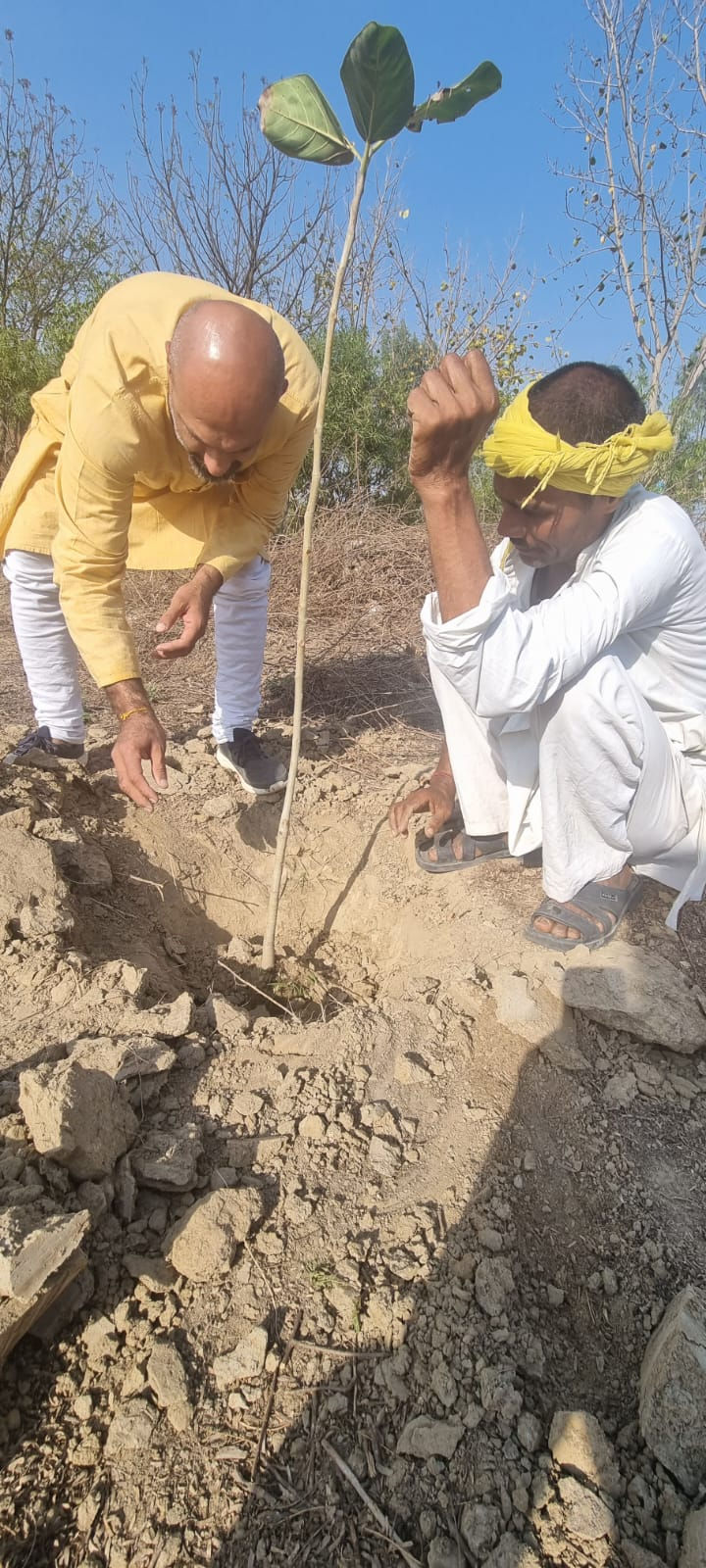


Dharitre: Earth Consciousness Education Programme
Dharitre is a nature-based education programme designed to cultivate ecological awareness, emotional connection with the natural world, and a sense of responsibility toward the Earth among children and young people. Rooted in the understanding that environmental challenges are not only scientific but relational, the programme integrates ecological knowledge with experiential learning, cultural wisdom, and inner development.
The programme introduces students to nature as a living system through immersive outdoor experiences, observation-based learning, and place-based exploration. Drawing from India’s ecological traditions alongside contemporary environmental science, Dharitre encourages students to understand interdependence in nature, recognise local biodiversity, and develop empathy toward landscapes, animals, and ecosystems. Activities include nature walks, ecological storytelling, seasonal observation, sacred grove learning modules, nature journaling, and hands-on conservation practices.
Rather than treating environmental education as a separate subject, Dharitre positions ecological awareness as a way of seeing and relating to the world. Students learn to read signs in nature, understand ecological cycles, reflect on human impact, and explore values such as care, restraint, reciprocity, and stewardship. The programme supports cognitive learning alongside emotional and ethical development, helping young people build resilience, attentiveness, and a deeper sense of belonging within the natural world.
Aligned with global sustainability education goals and India’s environmental learning priorities, Dharitre aims to nurture a generation of environmentally conscious citizens who see themselves not as separate from nature, but as participants within a shared ecological future.

Aranya

Aranya is envisioned as a school-based sacred grove—a protected micro-ecosystem that serves as a living classroom where students actively plant, observe, and care for nature as part of their everyday learning. Grounded in the One Health approach, which connects human health, ecological wellbeing, and community resilience, the initiative aims to transform a Government school in Delhi into a space where environmental education becomes practical, creative, and deeply experiential through activities such as composting, native planting, eco-clubs, and butterfly gardens. Designed for underprivileged children who often lack access to safe, biodiverse green spaces despite facing high environmental stress, Aranya provides consistent exposure to nature within the school, fostering ecological literacy, emotional wellbeing, and a sense of stewardship among both students and teachers. By improving microclimates, supporting urban biodiversity, and encouraging everyday sustainable practices, the programme demonstrates how healthier natural systems directly contribute to healthier individuals and communities
Protecting Nag Vans and Devta Cultures in Sainj, HIProtecting Indigenous Culture
Across many forested and mountain landscapes, conservation has historically been shaped not by formal policy or external enforcement, but by belief, restraint, and long-standing relationships with land. Nature has been understood not as a resource to be managed, but as a living presence embedded within social, moral, and spiritual worlds. These worldviews have given rise to practices that regulate how forests are used, how water is protected, and how extraction is limited—often with remarkable ecological outcomes.
Sacred Earth Trust’s work in this area focuses on documenting and supporting such indigenous, nature-based cultures at a time when they are undergoing rapid change. Through a new research initiative centred on Nāg Vans of kullu District, Himachal Pradesh—forest patches associated with serpent deities and local guardian spirits—the Trust is working to record belief systems, ritual practices, devta traditions, sacred grove connections, customary taboos, and community perceptions of forests and wildlife. These elements together form a conservation ethic that has historically governed access, protection, and responsibility within local landscapes.
The research process is participatory and attentive to lived knowledge. It involves sustained engagement with elders, temple caretakers, women, herders, and farmers, tracing how ecological understanding has traditionally been transmitted through oral traditions, seasonal rituals, and everyday practice. The intention is to create an illustrated and pictorial record that reflects the narrative, visual, and place-based nature of this knowledge, rather than reducing it to abstract description.
The importance of this work lies in the quiet but accelerating breakdown of these knowledge systems. Youth migration to cities, changing livelihood patterns, increasing exposure to external influences through tourism and media, and the weakening of intergenerational transmission have begun to disrupt long-standing cultural pathways. As ritual participation declines and collective governance erodes, the ecological functions embedded within these belief systems are often lost without being recognised as conservation losses.
Preserving indigenous nature-based cultures is therefore not an act of nostalgia, but a necessary response to ecological and cultural vulnerability. These traditions carry place-specific knowledge about forests, species behaviour, seasonal change, and limits of use that cannot be replaced by generic conservation models. Once disrupted, such systems are difficult to reconstruct.
Through this work, Sacred Earth Trust seeks to support continuity rather than revival, ensuring that these cultures are documented with care, represented accurately, and remain available to future generations. By making visible the conservation ethos embedded within indigenous belief systems, the Trust also contributes to a broader understanding of how ecology and culture have co-evolved, and why safeguarding one requires safeguarding the other.


Protecting Indigenous Culture
Across many forested and mountain landscapes, conservation has historically been shaped not by formal policy or external enforcement, but by belief, restraint, and long-standing relationships with land. Nature has been understood not as a resource to be managed, but as a living presence embedded within social, moral, and spiritual worlds. These worldviews have given rise to practices that regulate how forests are used, how water is protected, and how extraction is limited—often with remarkable ecological outcomes.
Sacred Earth Trust’s work in this area focuses on documenting and supporting such indigenous, nature-based cultures at a time when they are undergoing rapid change. Through a new research initiative centred on Nāg Vans of kullu District, Himachal Pradesh—forest patches associated with serpent deities and local guardian spirits—the Trust is working to record belief systems, ritual practices, devta traditions, sacred grove connections, customary taboos, and community perceptions of forests and wildlife. These elements together form a conservation ethic that has historically governed access, protection, and responsibility within local landscapes.
The research process is participatory and attentive to lived knowledge. It involves sustained engagement with elders, temple caretakers, women, herders, and farmers, tracing how ecological understanding has traditionally been transmitted through oral traditions, seasonal rituals, and everyday practice. The intention is to create an illustrated and pictorial record that reflects the narrative, visual, and place-based nature of this knowledge, rather than reducing it to abstract description.
The importance of this work lies in the quiet but accelerating breakdown of these knowledge systems. Youth migration to cities, changing livelihood patterns, increasing exposure to external influences through tourism and media, and the weakening of intergenerational transmission have begun to disrupt long-standing cultural pathways. As ritual participation declines and collective governance erodes, the ecological functions embedded within these belief systems are often lost without being recognised as conservation losses.
Preserving indigenous nature-based cultures is therefore not an act of nostalgia, but a necessary response to ecological and cultural vulnerability. These traditions carry place-specific knowledge about forests, species behaviour, seasonal change, and limits of use that cannot be replaced by generic conservation models. Once disrupted, such systems are difficult to reconstruct.
Through this work, Sacred Earth Trust seeks to support continuity rather than revival, ensuring that these cultures are documented with care, represented accurately, and remain available to future generations. By making visible the conservation ethos embedded within indigenous belief systems, the Trust also contributes to a broader understanding of how ecology and culture have co-evolved, and why safeguarding one requires safeguarding the other.